April 22, 2020

Photographers You Should Know: B.A. King, Part II


Church Window


Tony King passed away on May 13, 2017 of mesothelioma. Born in Canada, he spent most of his 83 years in Massachusetts. He was married to the artist Judith Stoddard King for 59 years, They had four children.

Beginning at age eleven with a Brownie camera given him by his mother, King quickly developed an interest in photographing and writing about the world around him. " My life has been dominated by one thing: a need to show people what I'm excited about. When I was a little boy, I was always dragging people off to show them the things that made the world wonderful to me."

Wonder

Tony owned a small manufacturing company in Worcester, MA for many years, a family business which gave him the freedom to pursue only those professional photographic endeavors which interested him. Those interests led especially toward photographing and writing books, at which he was prolific.

Among his many books are A Place to Begin: The New England Experience, with text by Hal Borland; The Faces of the Great Lakes, with text by Jonathan Ela (both of these books were published by the Sierra Club); Ojibway Summer, My Maine Thing, This Proud Place: An Affectionate Look at New England, Criss-Cross Applesauce, Keep In Touch (an album of some of his best black & white postcards) A Year to Remember (favorite photos from the black & white New England calendars he published for many years), Versed in Country Things, with poems by Robert Frost, Snow Season, from Snow to Snow, and The Oak Behind the House.

The Rig

For the last decade he has published compilations of his photographs on various subjects in small, soft-cover booklets called Going Home Books and Look Around Books. His final book, Closer to Home, for which he compiled the photographs and wrote the text shortly before his death, was published posthumously in December, 2017.

Although most of his books are out of print, copies of many of them can still be ordered from Time and Quiet Press. Their web site is http://timeandquietpress.com/ 

My copy of This Proud Place

My Maine Thing remains my favorite of his books, followed by This Proud Place, a book about New England. Tony has photographed in many places other than New England, but has mined most of his photographic riches from his own back yard.. He says, "Most were made just going about the natural business of living. Taking the carpool. Visiting my kids at summer camp. Taking my daughter to college. Moving my dad back and forth to his cottage on Lake Huron. Everywhere I go I leave a little extra time. I always have a camera with me. These things come out of my life."
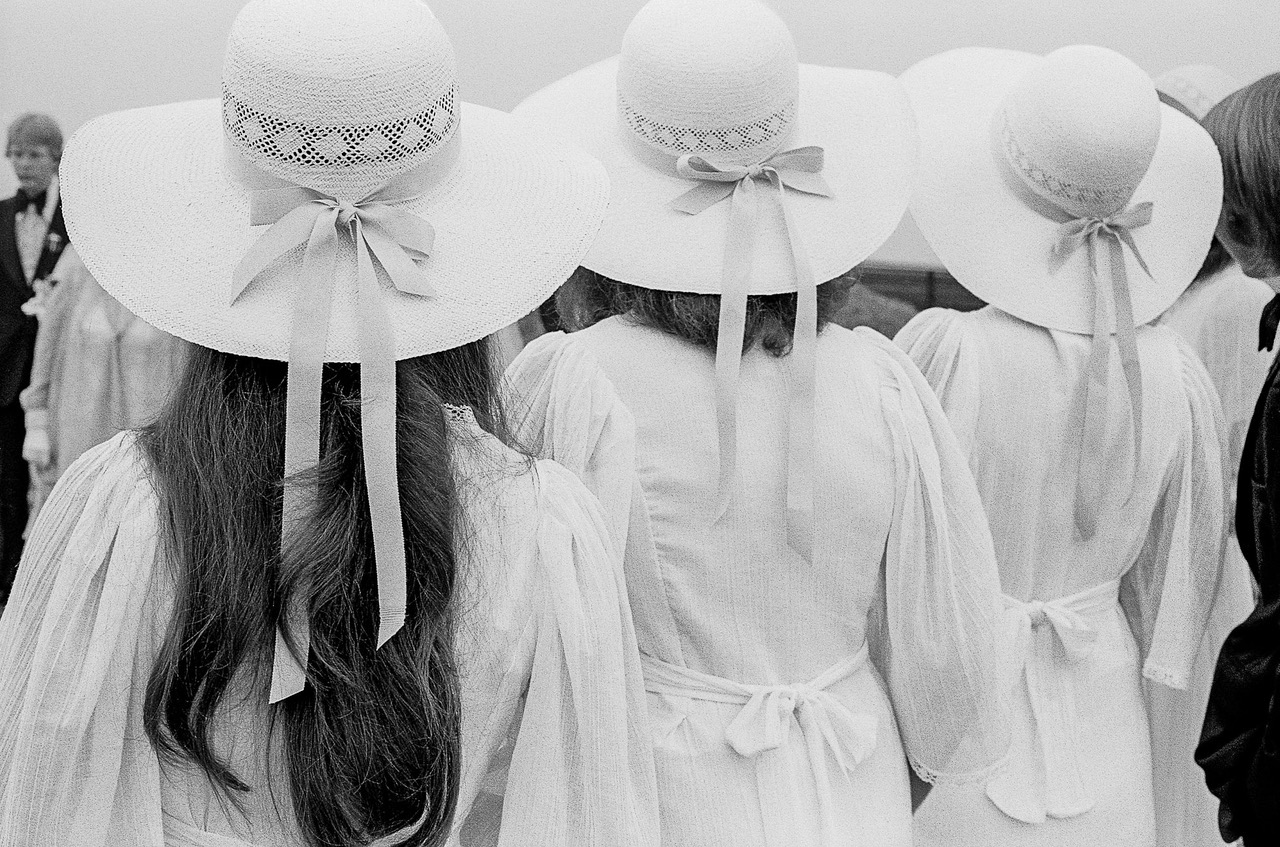
White Hats

 In the mid '90s, his concern about ecological issues gradually led him away from the black & white glimpses of life that I have found so satisfying and soul-enriching to concentrate on color photography of nature, culminating in the publication of the beautifully produced, limited edition book Of Time and Quiet.

While most of Elliott Erwitt's photographs contain people (Or dogs. Or people and dogs.), many of King's do not. However, they are alive with human presence. Even when no people are visible, their presence is felt -- as though they might have just stepped out of the scene, or were about to step into it. 

Hay Rake

Although he used digital cameras in his later years, Tony worked with Leicas for most of his career; also sometimes using a medium format camera which gave a square negative. I never asked him what it was. His technique is straightforward, as are his photographs. Most of his work, and certainly his best work, in my opinion, has been in black and white. Deceptively simple, spare, economical, yet always celebrating beauty and always with an undercurrent of mystery just beneath the surface.

(All photographs except for the photo of my copy of This Proud Place copyright Judy and Tony King Foundation, 2020.) 

To be continued. . .

Soli Deo Gloria

April 20, 2020

Photographers You Should Know: B.A."Tony" King

The Greatest Photographer You Never Heard of (but should have): The Long and Productive Life of B.A. "Tony" King


In 1982 my wife and I and our 14-year-old son hooked a Starcraft pop-up camper to our Mercedes 240D sedan and began a long, rambling trip from our home in northwest Georgia up through Virginia, Pennsylvania, New York City, and on up the coast, arriving late one afternoon at tiny Dock Square in Kennebunkport, Maine.
 
Curling up with a good book at the Kennebunkport
Book Port (Now sadly no longer in business)

The wife and son headed off to window shop, while I was drawn as with a magnet to a small bookstore, named appropriately, the Book Port, located up a flight of stairs above one of the shops. Nosing around, I picked up a book of photographs by B.A. King. I had read about him in photographic magazines the previous year, so I was immediately interested. The book was titled My Maine Thing, and as I turned its pages I was enthralled.

My well-worn copy of My Maine Thing.

My wife is descended from an old Maine family, but her parents had moved to New York when she was quite small, and then on to Miami when she was six. This was her first time back, and my first time ever in Maine. I found the whole experience enchanting, and the book became symbolic of my own "Maine thing." King's simple but elegant, mostly black-and-white photographs resonated deeply, and still do nearly 40 years later. Although I had read about him, this was my true introduction to the relatively obscure man whom I came to consider one of the very greatest American photographers of his era.

In a time when so many photographs scream "look at me!" Tony's pictures, at first glance, don't look like much. Most of them are quiet, few have what we would describe as impact. Like the man himself, they are full of unsuspected depths, insight, and wit. Many have a gentle mystery about them. Yet, almost all of them came out of the everyday fabric of his life. I could talk about them endlessly, but you really have to see them. I have a print which he gave me, which is at once both one of the simplest and yet one of the most satisfying photographs I have ever seen. It is a young girl's white party dress hanging on the bare wooden interior wall of a New England beach cottage. That's all. Just a 35mm available light shot, probably on Tri-X. How can it be so good? You have to see it.

The White Dress
(from My Maine Thing)

Needless to say, I bought the book. Then went on, over the years, to acquire most of his other books. It was not, however, until 1990 that I first contacted King, beginning a sporadic conversation by letter, email, and telephone which lasted until his death. He was gentle, soft-spoken, and unfailingly gracious. In my book Rock City Barns: A Passing Era (Silver Maple Press, 1996) I credited him as one of the four photographers who have taught me to see beauty in the commonplace. (The other three are Fritz Henle, Elliot Erwitt, and Robert Doisneau.) My pictures don't look anything like Tony's but his example has helped me learn to see and photograph both the beauty and the mystery of our world.

The Wind Harp
Tony says this a wind harp. To me, it looks like someone
just abandoned a harp to molder away in a field.
(from This Proud Place)

(All photographs except for the photo of my copy of My Maine Thing copyright Judy and Tony King Foundation, 2020.) 

To be continued. . .

Soli Deo Gloria

April 17, 2020

Photographers You Should Know: The Wisdom of Elliott Erwitt

(Blog Note: For some reason Google has decided to block my use of some of Erwitt's photographs, even though I posted them under fair use rules and with proper attribution and copyright notice. Sorry.)


Elliott Erwitt has a reputation as a man of few words. Yet, over the years he has amassed a formidable array of quotable quotes about photography. Let's listen to the man himself:

The Essence of Photography

"To me, photography is an art of observation. It's about finding something interesting in an ordinary place... I've found it has little to do with the things you see and everything to do with the way you see them. . . it's about creating something extraordinary out of the ordinary. You choose a frame and then wait until the right time for something magical to come along and fill it. . . Most photographers work best alone, myself included.

"I like things that have to do with what is real, elegant, well presented and without excessive style. In other words, just fine observation. . . I appreciate simplicity, true beauty that lasts over time, and a little wit and eclecticism that make life more fun.

"Good photography is. . .just about seeing. You either see or you don't see. The rest is academic. Photography is simply a function of noticing things. Nothing more. . .All the technique in the world doesn't compensate for the inability to notice. . . You can find pictures anywhere. It's simply a matter of noticing things and organizing them. . . Photography is pretty simple stuff. You just react to what you see, and take many, many pictures.. . . Nothing happens when you sit at home. I always make it a point to carry a camera with me at all times...I just shoot at what interests me at that moment. . . The best things happen when you just happen to be somewhere with a camera."

On Learning Photography

"You don't study photography, you just do it. . . Photography is a craft. Anyone can learn a craft with normal intelligence and application. To take it beyond the craft is something else. That's when magic comes in. And I don't know that there's any explanation for that. . . It's just seeing - at least the photography I care about. You either see or you don't see. The rest is academic. Anyone can learn how to develop. It's how you organize what you see into a picture.

"Balance of light is the problem, not the amount. Balance between shadows and highlights determines where the emphasis goes in the picture...make sure the major light in a picture falls at right angles to the camera.

"There's no great mystique to photography. A lot of photographers like to put their hands up to their forehead and tell you how they've suffered and so forth. Well, I just rent a car and drive to the place and take the pictures. . .The main thing is to study pictures and stop listening to the pontifications of photographers. Photographers aren't oracles of wisdom. If they're good photographers, then take a good look at their pictures - what else do you need? 

"A picture should be looked at - not talked about. . .My 'work' is about seeing not about ideas. . .The whole point of taking pictures is so that you don't have to explain things with words. . . I am serious about not being serious."

On Professionalism

"I am a professional photographer by trade and an amateur photographer by vocation. . . Working myself into a position of total versatility, so that I can do anything I want to do at the time I want to do it. Whether I do it or not is another question.


"As a professional photographer I take photographs for other people to see - but I want them to see what I see. So I never assume that only a few people will appreciate what I do. At all times, the public should be able to understand what I've done, even if they don't understand how I've done it.. . Do what the client wants, not what you want.

"Somehow Photoshop and the ease with which one can produce an image has degraded the quality of photography in general. . .electronic manipulation of pictures. I think it's an abomination. I reject it all. I mean, it's OK for selling corn flakes or automobiles or for taking pimples out of Elizabeth Taylor's face, but it undermines the thing that photography is about, which is about observation and not about manipulation of images."

(All photographs Copyright 1953-2020 Elliott Erwitt.)

Blog Note: Since Mr. Erwitt's statements were made at various times during his long career, I have taken the liberty of arranging them into sequences by subject.

Soli Deo Gloria 

April 15, 2020

Photographers You Should Know: Elliott Erwitt

Elliott Erwitt: Mother and Baby with Cat
New York, 1953. Erwitt's first wife with their first child.

The Best Photographer of the 20th Century
 
I consider Elliott Erwitt to have been the best photographer of the 20th century. I did not say "greatest," because he was not a seminal photographer. He did not found any major movement in photography, as did Kertesz, Steiglitz, Cartier-Bresson, Walker Evans, Robert Frank, and maybe a few others. But he  worked in many different genres -- advertising, architecture, reportage, film -- and was the best or among the best at everything he did. As a commercial photographer, he was a consummate professional, good enough to own a spacious condominium in one of the stately, old apartment buildings on the West Side of New York's Central Park.

However, the area in which he excelled all others was in the genre we often call "Decisive Moment" photography. (Cartier-Bresson, by the way, did not invent the genre, although the phrase was coined for his first book. He actually built on the work of Steiglitz and Kertesz.) 

In this work of observation and documentation of human (and often, dog) nature, juxtapositions, incongruities, absurdities -- combined with razor sharp reflexes and technical skill, Erwitt is simply the best. He can size up a complex situation and make a striking photograph in an instant. And no one else comes close to producing the volume (I should say "volumes") of incisive photographs Erwitt spins out, seemingly effortlessly. 

Sometimes Erwitt's wit is very subtle,
and sometimes it's like a slap in the face.

There are others who do this work very, very well -- my favorites among them are Robert Doisneau and B.A."Tony" King, who have each produced many photographs as good as Erwitt's -- but Erwitt produces great photographs in phenomenal volume. He could walk around the block -- just about any block -- and come back with more good photographs than I could produce in a year.

Erwitt is 91 years old, as of this writing, and for the past several years has been going through his contact sheets, finding more gems, and publishing more books. Many of them are now available on the used market at reduced prices. They are all worth having. I especially recommend Personal Exposures, a large volume filled with many of his best-known photographs.

I had a large collection of Erwitt's books, but since we're downsizing and preparing to move into a smaller home I've had to sell most of them. I'm keeping Private Experience, from the Peterson Masters of Contemporary Photography series. Private Experience is not a large book and was published more than 40 years ago, but I have not found a better overview of his life and work. It's the one book I won't part with. I'm fortunate to have a copy in hard cover. Used, softcover copies are readily available for under $5 at amazon.com and abebooks.com.

I think the photograph of Erwitt's first wife and baby with the cat is one of the most beautiful photographs ever made.

Photographs © Copyright Elliott Erwitt 1953-2020
 
Soli Deo Gloria