![]() | ||||||||||
|
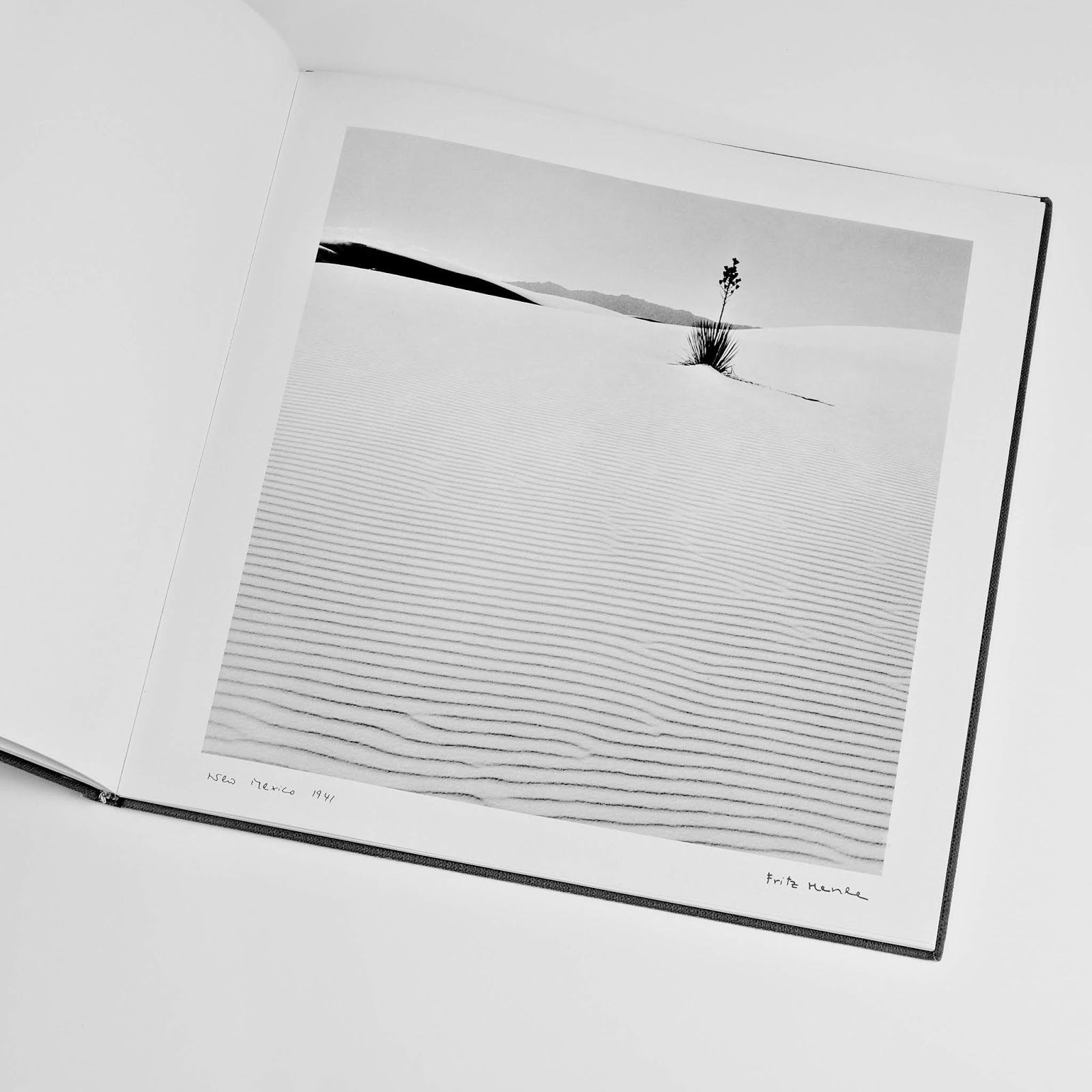
Fritz Henle 50 Years Very rare. Published
by Rollei Fototechnic Gmbh in 1984. Silver portfolio box embossed with Henle's
name. Includes a brief essay by Henle, "Life is Photography" in
English, French and German. Portfolio contains 24 Rolleiflex photographs, most
about 10.5x10.5 printed by rotogravure on 13.5x13.5 heavy stock. Near-fine
condition; very clean and crisp with no internal marks. $325 SOLD
|
My domain is the old, the odd, and the ordinary; the beautiful, the abandoned, and the about to vanish away. I am a visual historian of an earlier America and a recorder of the interface between man and nature; a keeper of vanishing ways of life.
May 11, 2020
Fritz Henle Books and Portfolios Sale
Coming: Fritz Henle Book and Portfolios Sale
May 8, 2020
Footloose in Italy: The Cinque Terra
![]() |
Corniglia sits on a high promontory
at the base of the mountains.
|
Louise and I love to travel, both
in the U.S.
and abroad, and have been blessed with the opportunity to visit more than 30
countries as well as most of our states. Since the late 1980s we seem to have
averaged about one major trip every five years. In 2005 our destination was Italy.
I call the way I like to travel
"footloose," meaning no fixed itinerary and no fixed schedule. Louise
doesn't like doing that as much as I do, and indeed it's getting increasingly difficult
to travel that way, especially abroad. But this was 15 years ago, the world
wasn't quite as hostile a place, and Louise was only 60 then and more
adaptable.
We arrived in Rome and found a nice place to stay. I'll
write more about our time in Rome
in a future post. We spent several days there before taking the train on up the
coast. I should mention that we never rented a car while in Italy -- we
went everywhere by train, bus, and taxi. And we did a lot of walking!
![]() |
Monteroso and its beach.
|
By 2005 I was only into my second
year with digital cameras and carried a pair of Canon EOS 20Ds with an
assortment of lenses (too many, actually) on this trip. The lens most used was
the Canon EF 24-85 f3.5-4/5. I also carried a Sigma 14mm lens, which was
valuable because it gave a 21mm field of view on the APS-C sensor of the 20D. The
only full-frame cameras available at that time were the Canon EOS 1Ds and
1DsII, both far beyond my budget.
We had heard much about a place
called Cinque Terra (it literally means "The Five Lands"), five
villages on Italy's northwest cost which are also part of a national park and
an UNESCO World Heritage Site. We spent the night in a hotel in Livorno and arrived in Monteroso, northernmost of the
villages, the next day. We quickly found a place to stay, and set out to
explore. And also, of course, to find something to eat!
![]() |
Monteroso is surrounded on three
sides by terraced mountains.
|
Besides Monteroso, the other
villages are (going south) Vernazza, Corniglia, Manorola, and Riomaggiore. They
are built at the base of mountains rising out of the sea, and Monteroso,
Vernazza, and Riomaggiore are actually built in ravines coming down the
mountanside. That has been the cause of some serious flooding and destruction
on occasion. The mountansides, by the way, are fully terraced with vineyards.
![]() |
The houses in Riomaggiore are almost built on top
of each other on the steep sides of a ravine
going down to the water.
|
Monteroso has a very nice,
although not large, beach, and Louise, ever the beach bunny was eager to get in
some sun-time. We both are also inveterate explorers, and on our second day there she talked me into walking up and over the mountain to Vernazza. She
obviously has no respect for the elderly! But it was well worth it.
To be continued. . .
Blog Note: I'm taking a temporary break from the "Photographers You Should Know series. They are time-consuming and sometimes difficult to write, and I have quite a bit on my plate right now. But we'll be back with more soon. Next up: James Ravilious.
(Photographs
copyright David B. Jenkins 2020)
Soli Deo
Gloria
To the
glory of God alone
May 6, 2020
Photographers You Should Know: An Encounter with Fritz Henle
![]() |
Fritz Henle
About
age 70.
|
Blog Note: Retired architect John Donald
Walters, who was born in Canada, grew up in New Mexico, and has spent most of
his life in Australia, responded to my notice on the Rangefinder Forum of my series of blog posts about Fritz Henle
with a lovely story of meeting Henle in Bermuda while a 19-year-old aspiring
photographer on his first trip abroad. His narrative tells us that Henle was
very much the kind of person his photographs reveal him to have been. Don has
kindly given me permission to publish his account on this blog. I would love to
also publish some of the pictures he took on that Bermuda
trip, but unfortunately they are stored 800 kilometers away and he won't be
able to get to them until at least June. If time hasn't taken too great a toll on those
54-year-old color negatives, we will revisit this again with some of his
pictures.
In 1966 I was on my first overseas
trip from Canada, five days
in Bermuda. On day one I took my Yashica D and
some color film and went walkabout, on the hunt for the usual trite tourist
images every photographer made in that era. Mr. Henle had just finished a photo
shoot on a nearby beach. When he had packed up his Rolleis we had a long
conversation about photography, cameras, film and shooting, which led to coffee
and a late breakfast at his hotel, introduction to his beautiful and charming
wife, and a detailed inspection of my portfolio of distinctly inferior printed
snaps.
For a photographer of his reputation and standing he was amazingly kind to this 19-year old photographer with a downmarket camera. I doubt my snapshots - in those days I always had a small portfolio album with me - greatly impressed him, but he looked at everything and made many kind and positive suggestions for me to improve my compositions, check various angles before clicking off a frame (in those days I took only one or two shots of any subject), and let me check out his Rollei kit, a 2.8F and a 3.5F. He gave me a copy of one of his books (I have it in storage so cannot check the title) which he autographed and generously refused my offer to pay for it.
That year I bought a Rollei 3.5E2 which I still have and use. As much as I would like to say Mr. Henle's good advice greatly improved my photography, it took me a few more years and much experimenting before I began to develop my own vision and find my way in the genre.
His best advice to me was not to copy others (not even him!) but to look for images of my own making of subjects I was most interested in. Until then I had shot mostly weddings, conventional studio portraits and news photos. I started exploring new subjects that interested me and found I was gravitating to old buildings and environmental work. Ultimately my career path took me out of news media and studio imagery to 'art' subjects and eventually to architecture (I qualified as an architect in interior design in 1990).
Interesting how a haphazard encounter with one person and the right words of encouragement could have such positive effects on one's life. I have always been thankful to Mr. Henle for the time he took to talk to me and give me his good advice, most of which I have tried to follow in my decades as a photographer.
For a photographer of his reputation and standing he was amazingly kind to this 19-year old photographer with a downmarket camera. I doubt my snapshots - in those days I always had a small portfolio album with me - greatly impressed him, but he looked at everything and made many kind and positive suggestions for me to improve my compositions, check various angles before clicking off a frame (in those days I took only one or two shots of any subject), and let me check out his Rollei kit, a 2.8F and a 3.5F. He gave me a copy of one of his books (I have it in storage so cannot check the title) which he autographed and generously refused my offer to pay for it.
That year I bought a Rollei 3.5E2 which I still have and use. As much as I would like to say Mr. Henle's good advice greatly improved my photography, it took me a few more years and much experimenting before I began to develop my own vision and find my way in the genre.
His best advice to me was not to copy others (not even him!) but to look for images of my own making of subjects I was most interested in. Until then I had shot mostly weddings, conventional studio portraits and news photos. I started exploring new subjects that interested me and found I was gravitating to old buildings and environmental work. Ultimately my career path took me out of news media and studio imagery to 'art' subjects and eventually to architecture (I qualified as an architect in interior design in 1990).
Interesting how a haphazard encounter with one person and the right words of encouragement could have such positive effects on one's life. I have always been thankful to Mr. Henle for the time he took to talk to me and give me his good advice, most of which I have tried to follow in my decades as a photographer.
(John Donald Walters text copyright 2020)
Soli Deo Gloria
For the glory of God alone
Soli Deo Gloria
For the glory of God alone
Subscribe to:
Posts (Atom)